Trail Running with a Jogging Pram: Is It Safe, and What to Look For?
Becoming a parent doesn't mean giving up the trails. It just means you're now running with a very small, very opinionated passenger. Plenty of mums and dads swap solo miles for family miles, and a good jogging pram makes that possible.
But a woodland path is a different beast from a smooth pavement. Roots, ruts and puddles all test a jogging pram in ways a flat park loop never will. So before you point the wheels at the nearest forest, here's what you need to know about safety and what to look for when choosing a jogging pram for off-road running.
Is Trail Running with a Jogging Pram Actually Safe?
Short answer: yes, provided you get three things right. Your baby needs to be old enough, your pram needs to be built for the job, and your route needs to match both. Get those wrong, and even a gentle trail can turn stressful fast.
Your Baby's Age Matters Most
The most common advice is to wait until your baby has good head and neck control, which usually happens around six months. Before that, their necks simply can't cope with the constant vibration of running, and that's even more true on uneven ground.
Some parents wait a little longer before tackling rougher trails, and that's perfectly sensible. Always check your pram's manual for the manufacturer's minimum age, and if you're unsure, have a quick chat with your GP or health visitor. They'd much rather you ask than guess.
Not Every Pram Is Built for Running
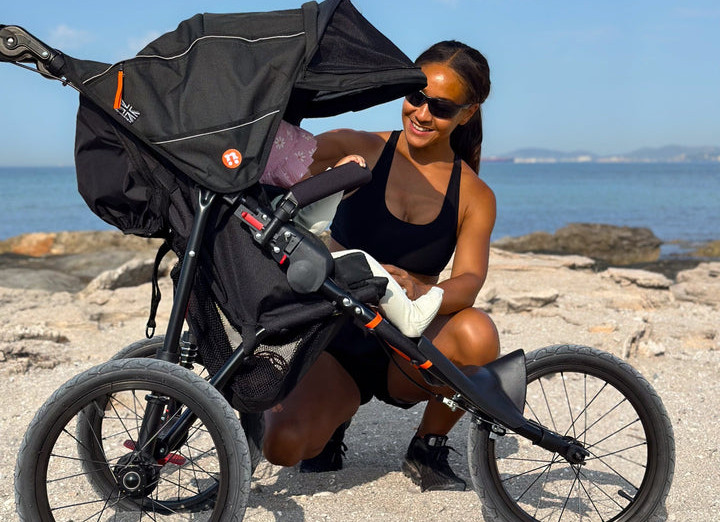
This is where lots of people go wrong. A standard pushchair, even a sturdy one, is not automatically designed to be run with. The frame, wheels and brakes need to cope with speed and bumps. A proper jogging pram is usually a three-wheeler with a stable frame, larger wheels and a braking system designed for momentum.
Whatever you're considering, check the manufacturer's specifications to confirm it's approved for running, not just walking.
Choose the Right Terrain
Don't jump straight onto technical singletrack. Start with wide, dry, well-maintained paths such as gravel tracks, canal towpaths and park trails. Once you're comfortable with how the jogging pram handles at speed, you can gradually try something rougher. Steep, loose descents are where most accidents happen, so treat them with respect.
What to Look for in a Jogging Pram for Trails
Buying a jogging pram is a bit like buying running shoes. What suits a road runner won't necessarily suit someone who lives for muddy hills. Here are the features that really matter off-road.
A Locking Front Wheel
A swivel front wheel is brilliant for shopping trips and tight corners. At running speed, though, it's a liability. A wobbling wheel can catch on a rut and flip the pram. Make sure your jogging pram has a front wheel that locks straight for running and unlocks for walking.
Big, Air-Filled Tyres
Pneumatic tyres soak up bumps far better than foam or plastic ones. Larger wheels also roll over roots and stones more easily. The trade-off is that air-filled tyres can puncture, so carry a small pump and a puncture repair kit, and check the pressure before every run.
Suspension
Decent suspension is the difference between a happy baby and a grumpy one. It smooths out the shudder from bumpy ground and protects your little one's comfort. If you plan to run trails regularly, treat it as essential rather than a nice extra.
A Reliable Handbrake
Your legs shouldn't be the only thing stopping the pram on a downhill. A hand-operated brake lets you control your speed without hauling back on the handlebar. A parking brake alone isn't enough here, so check that the pram has a proper handbrake.
Harness, Wrist Strap and Canopy
Look for a snug five-point harness and use it every single time, even on short runs. Wear the wrist strap too. If you trip, it stops the pram from rolling away from you. A large, adjustable canopy is worth having as well, since it shields your baby from sun, wind and light drizzle.
Weight, Storage and Growth
A lighter frame is easier to lift over a stile or muddy patch. Storage matters more than you'd think, because you'll be carrying water, spare layers, snacks and probably a toy that keeps getting thrown out. And check the maximum weight limit, so the pram lasts well beyond the first year.
Safety Checks Before You Head Out
A few minutes of preparation can save you a lot of hassle on the trail.
Check the Pram
Give the tyres a squeeze, test the brakes, make sure the front wheel is locked, and check that everything is secured properly. Get into the habit of doing this every time, just as you'd tie your laces before a run.
Look After Your Passenger
Remember that your baby isn't working up a sweat like you are. They're sitting still, so they'll get cold faster. Pack extra layers, a hat and a blanket. In summer, use sun cream (if they're old enough) and make sure they're shaded and hydrated. Build in regular breaks so they can stretch, feed and have a cuddle.
Let Someone Know
Tell a friend or family member where you're going and roughly how long you'll be, and carry your phone. Trails can be quiet, and mobile signal isn't always reliable, so a little planning goes a long way.
Safe Trail Technique with a Jogging Pram
Running with a pram changes your gait. You've got one hand on the handlebar, an extra load in front of you, and less freedom to swing your arms. So ease in gently.
Stay in Control on Descents
Keep the pram in front of you and use the handbrake on downhills. Never let it run ahead of you. On tight bends, slow right down before you reach the corner rather than braking halfway round.
Know When to Walk
Roots, deep mud, loose scree and steep camber are all good reasons to drop to a walk. Nobody is judging you. Walking a tricky section is a smart decision, and there's no medal for tipping your baby into a ditch.
Build Up Gradually
Start with short, flat routes to learn how your jogging pram handles. Pushing a pram uses your body differently, so shorter runs at an easy pace are a good way to build confidence and fitness together.
When to Skip the Run
Some days, the best decision is to stay home or stick to the pavement. Skip the trail if it's icy, waterlogged or windy enough to make control difficult. The same goes for days when your baby is unwell, teething badly or just not in the mood. There will always be another run.


Comments